 English
 Français
 عربى
 русский


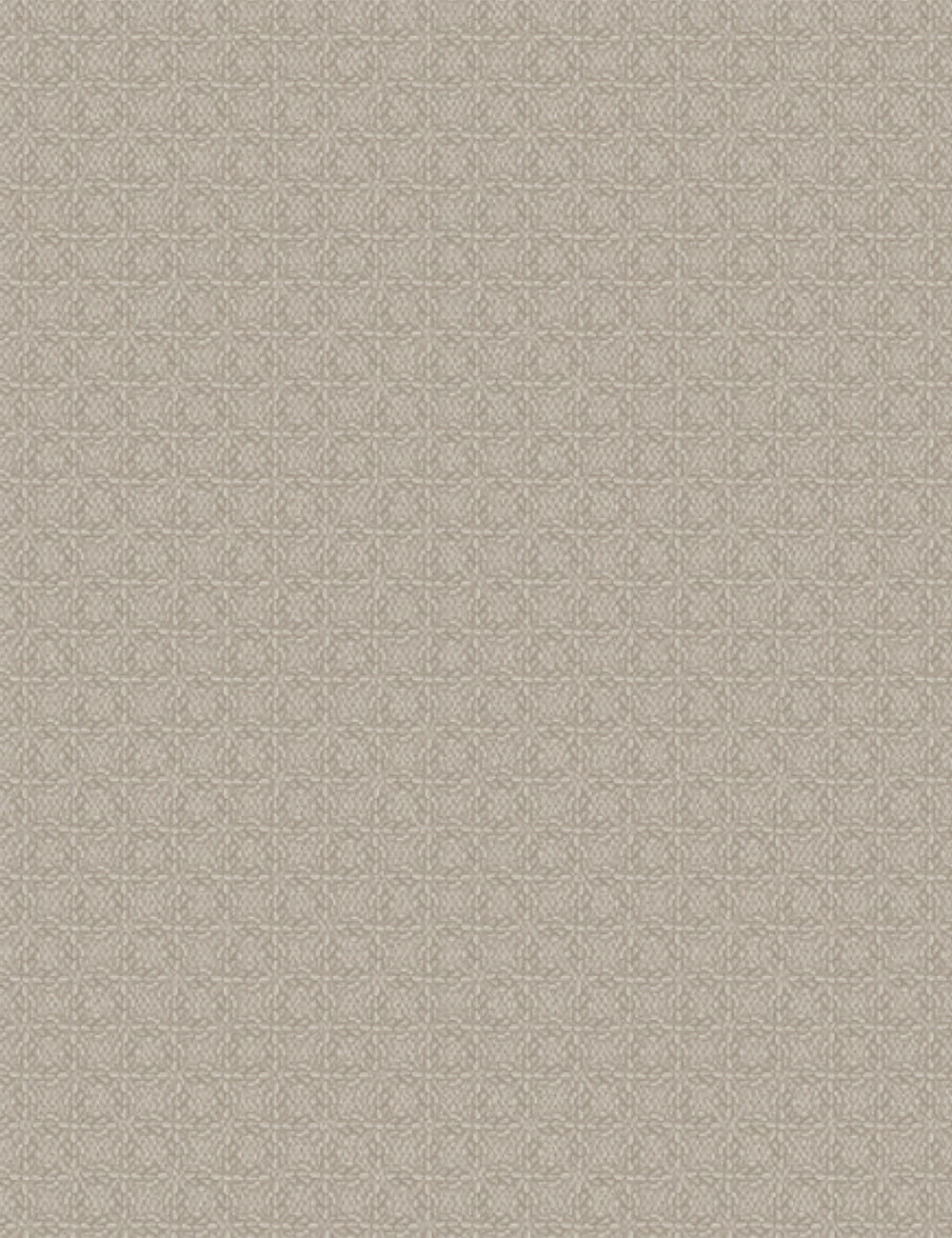
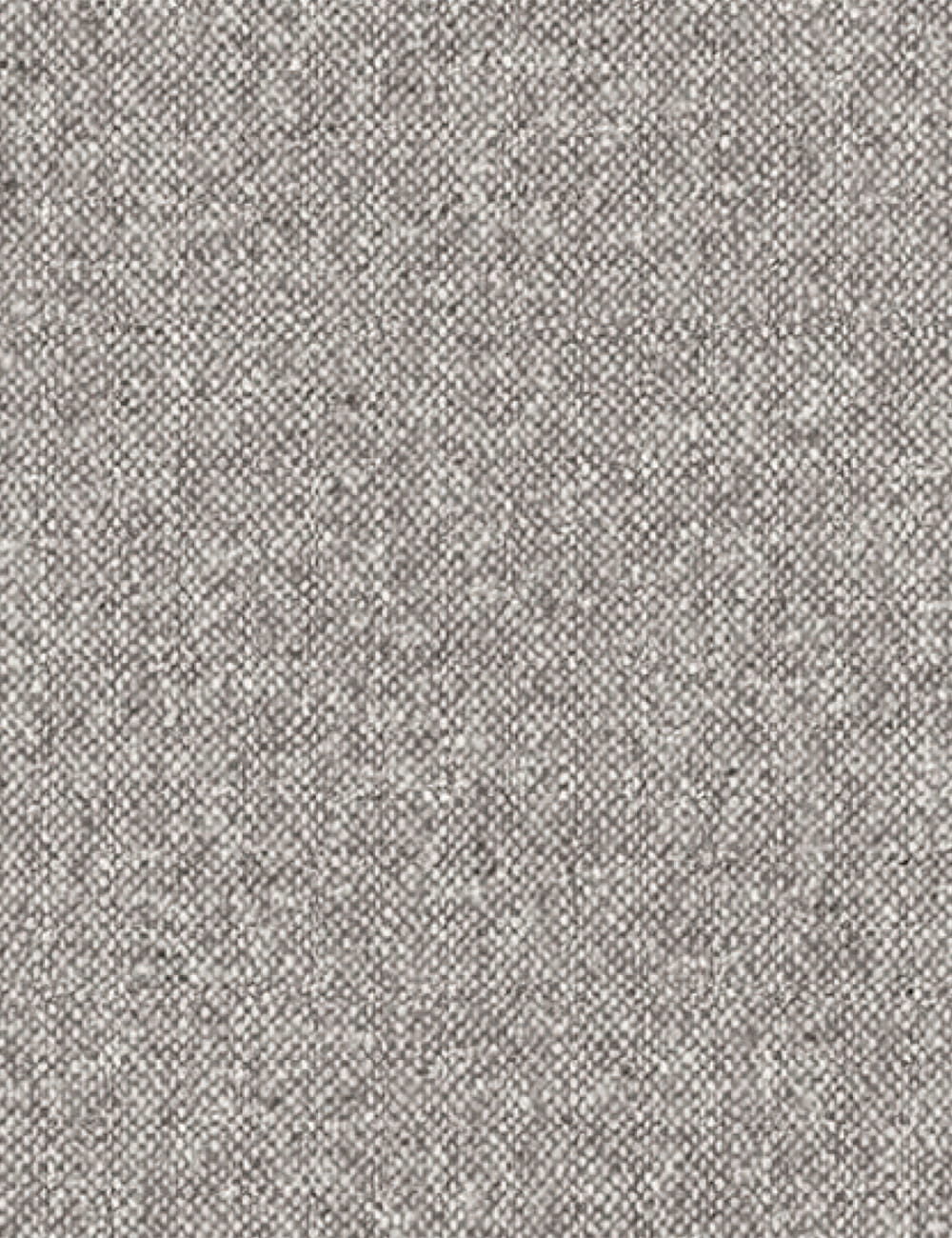
CoreVip(Shanghai) Decoration Materials Co., Ltd. specializes in the design, research and development, and production of furniture and interior decorative panels. We are China Fabric Texture Series - 7x9ft Decorative Panel Series (2070×2800mm) Suppliers and Custom Fabric Texture Series - 7x9ft Decorative Panel Series (2070×2800mm) OEM/ODM Factory.
Our brand philosophy is rooted in the harmonious fusion of natural artistry, contemporary aesthetics, and technological innovation. We meticulously select and refine raw materials, and continuously develop surface finishes that resonate with the aesthetics and lifestyles of the new era.
True luxury speaks through the essence of materials, the balance of proportions, and the subtlety of details, never through excess. With a philosophy of deliberate reduction, CoreVip(Shanghai) Decoration Materials Co., Ltd. unveils a more sophisticated vision of spatial beauty, crafting timeless and one-of-a-kind value for each home and each living environment.
-
Decorative Cladding Panels: Material and Finish Specs for Co...
Commercial cladding projects rarely fail on appearance; they fail on documentation. A panel that looked correct on a 200 mm sample can still be rejected at handover because the fire classification covers a bare board rather than the bonded assembly, because the second production batch drifts two D...
-
7x9ft Furniture Board: Applications and Handling in Large-Sc...
A 7x9ft furniture board measures 2,070 x 2,800 mm and carries 5.80 sq m of decorative face per sheet, about 70% more surface than the 1,220 x 2,800 mm panel most plants are tooled for. That extra 850 mm of width is what makes one-piece wardrobe doors and single-span hotel casegood gables possible,...
-
Laminated Furniture Board: Judging Surface Durability, Core ...
An 18 mm cabinet door hung on a 2.4 m run shows every 0.1 mm of thickness variation the panel carries, and a thin decor paper pressed over a coarse core shows every fibre underneath it. That is why a laminated furniture board has to be approved on three separate numbers: surface wear, caliper tole...
CoreVip(Shanghai) Decoration Materials Co., Ltd. is an Italian high-end decorative design brand specialising in the design, research and development, and production of furniture and interior decorative panels. CoreVip is the Fabric Texture Series - 7x9ft Decorative Panel Series (2070×2800mm) Suppliers for furniture producers, distributors and fit-out contractors working in the 2.8 m sheet format, and this range carries textile-derived surfaces on 2070 × 2800 mm panels.
2070 × 2800 mm (7x9ft) Decorative face
5.80 m² per sheet Substrates
MDF, particleboard, plywood
A Woven Surface Produced on the Panel, Not Applied On Site
As a Custom Fabric Texture Series - 7x9ft Decorative Panel Series (2070×2800mm) OEM/ODM Suppliers, Factory, we match product configuration to the application, operating limits, interfaces and acceptance criteria defined for each project.
Each fabric texture is built into the panel: a textile-derived decor print carried on the surface layer, closed under an embossed register that gives the face the directional sheen and fine relief of woven cloth. The result is a matte, low-glare surface that reads as fabric at conversational distance while behaving as a rigid, cleanable decorative board.
- Print register and pattern scale — set so repeats line up across adjacent sheets in a wall run.
- Emboss depth and gloss level — kept inside a defined window so texture and sheen stay consistent sheet to sheet.
- Colour and tone — held batch to batch against the approved master sample.
- Surface preparation — sanding and board treatment before pressing, so the decor layer sits flat and clean.
What the 2070 × 2800 mm Format Changes
One sheet covers 5.80 m², roughly 70% more decorative face than the 1,220 × 2,800 mm board of the same length. That width removes the vertical joint from typical 2.4–2.8 m wall elevations and lets tall door and panel blanks come out as a single piece. The format is part of the parent 7x9ft Decorative Panel Series (2070×2800mm), so decors can be coordinated across finishes at the same sheet size.
- Full-height wall cladding up to 2.8 m cut without a horizontal seam.
- Wardrobe and pivot door fronts produced without a centre joint.
- Fewer metres of edge banding and fewer joint trims per elevation.
- Cut lists planned around the 2,070 mm width so grain and pattern direction are preserved.
The sheet also sets its own handling rules: two-person lifting, flat A-frame storage and transport racking sized for 2.8 m lengths. We pack to the shipment mode and confirm crating requirements with the order.
Our Fabric Texture Range
| Code | Surface | Visual direction | Where it fits |
|---|---|---|---|
| TB-127 | Floral Fabric Texture | Floral-derived textile register with visible woven rhythm | Feature walls, headboard panels, retail back walls |
| TB-128 | Floral Fabric Texture Classic | Quieter, more traditional floral treatment | Hospitality guest rooms, residential wardrobes, door skins |
| TB-129 | Grey Fabric Texture | Neutral grey woven face, restrained and even | Office joinery, kitchen tall units, reception desks |
The three codes are produced on the same press line and share the same substrate options, so a scheme can mix a floral wall with a neutral grey carcass without a tone shift between rooms. Where a project needs a flatter or glossier companion surface, the Solid Color 7x9ft Decorative Panel and the Leather Texture Series run at the same 2070 × 2800 mm size.
Substrate Build and Pressing Control
Fabric textures are pressed onto particleboard, MDF and plywood; the board grade and thickness follow the duty of the part, since carcass work, door fronts and wall cladding load the panel differently. Substrate screening, sanding and surface treatment come first, then uniform adhesive application and controlled pressing — the stage where bubbles, wrinkles and later delamination are prevented.
- Substrate and thickness confirmed per project before the pressing run.
- Balanced face and back build to limit bowing on tall fronts.
- Cut-to-size and matching edge banding available from the same decor family.
- Sheet size and thickness customised to market and furniture-system requirements.
Where the Series Fits
- Residential full-house: wardrobe interiors and fronts, kitchen tall units, media walls, interior door skins.
- Hospitality: guest-room headboards and wardrobe fronts, corridor and lift-lobby cladding.
- Retail: display fixtures, back panels, cash and service counters.
- Office and contract: reception desks, meeting-room cladding, storage joinery.
Where the face meets moisture or heavy daily handling — kitchen splash zones, contract casework — we confirm substrate, edge treatment and fixing method at quotation stage rather than after the panels are cut.
Installation and Site Handling
- Acclimatise sheets flat in the installation space before cutting; keep them on an A-frame, never leaning.
- Cut and machine with sharp, low-rake tooling and support the sheet along its full length.
- Edge-band or seal cut edges before fixing so the core is closed to ambient humidity.
- Fix wall cladding by direct adhesive on flat, dry substrates or on a batten system, leaving the specified movement gaps.
- Handle 2,070 × 2,800 mm panels with two operatives and protect faces during transport on site.
Quality Control and Acceptance
Raw materials are screened and audited before they enter production, then inspected and comparatively tested on arrival. Through the run, surface performance, structural stability and batch-to-batch consistency are held by standardised process steps and in-process inspection across our 23,000 m² facility and 18 production lines.
- Colour and texture judged against the approved master sample under defined lighting and viewing distance.
- Thickness, flatness and squareness measured on the sheet, not on a cut sample.
- Adhesion checked at cut edges, where a weak lamination shows first.
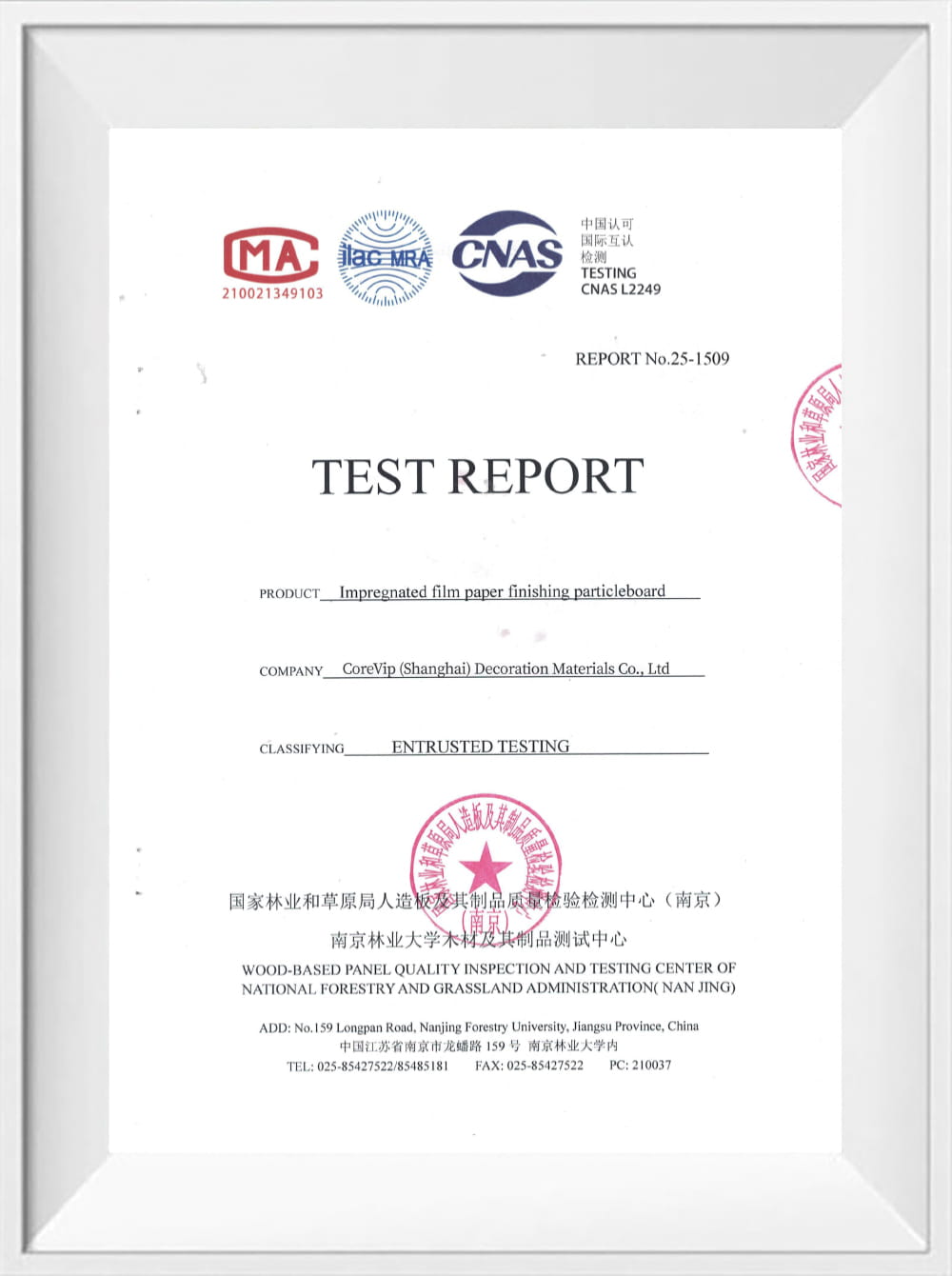
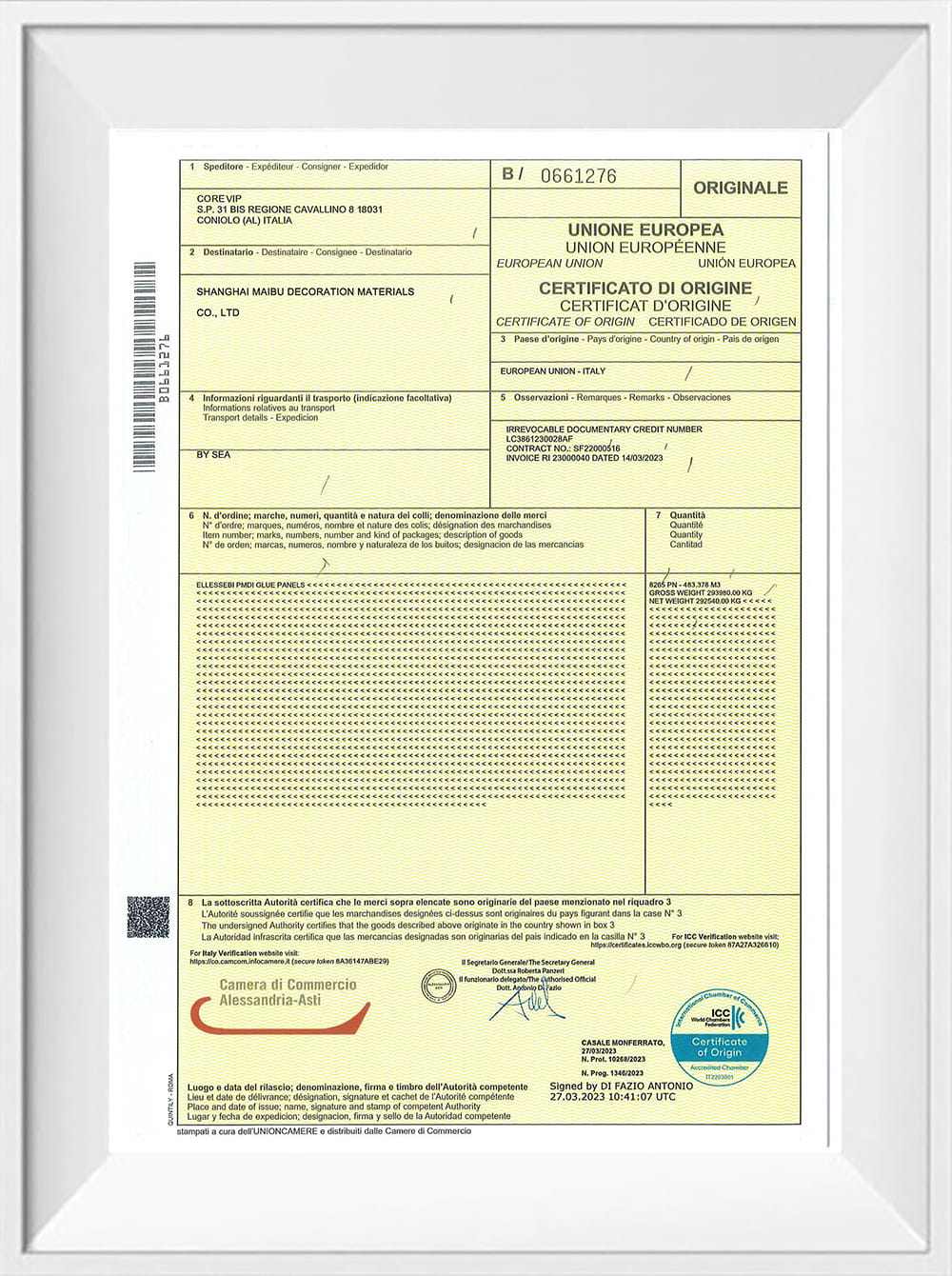
- Inspection report, quality inspection certificate and certificate of origin issued with the shipment.
Information We Use to Configure Your Solution
- Decor and code: TB-127, TB-128 or TB-129, or a mix across a scheme.
- Substrate and thickness: particleboard, MDF or plywood, with board grade for the part.
- Sheet or cut list: full 2070 × 2800 mm sheets, or a cutting plan with grain direction marked.
- Quantity and phasing: total volume plus delivery splits if the site is built in stages.
- Edge treatment: matching edge banding, profile and where it is applied.
- Application and exposure: wall, door, carcass or counter, and whether moisture or heavy abrasion applies.
- Destination and packing: port, shipment mode and any crating or labelling requirement.
Samples, Documentation and Delivery Scope
Physical samples of each fabric texture are issued before production and the signed-off sample becomes the reference for the run. Panels leave our Shanghai factory with matched decor codes, edge banding from the same family and the inspection documents that site handover usually asks for, so a wall run, a wardrobe front and a door blank can be specified from one surface system.
Frequently Asked Questions
What separates TB-127, TB-128 and TB-129?
TB-127 and TB-128 both carry a floral-derived textile register, with TB-128 a quieter, more traditional treatment; TB-129 is a neutral grey woven face. We send physical samples so the register and tone are judged on the actual surface rather than on screen.
Which substrates can the fabric texture be pressed onto?
Particleboard, MDF and plywood, in the thickness suited to the part. We confirm substrate and thickness with the order because a wall panel, a door front and a carcass side load the board differently.
Can you supply cut-to-size panels and matching edge banding?
Yes. We supply full 2070 × 2800 mm sheets or cut-to-size blanks from a supplied cutting list, with PVC edge banding matched to the same decor family, so the board and the finishing material come from one source.
How is the surface accepted at handover?
Against the approved master sample, under agreed lighting and viewing distance, together with measured thickness, flatness and squareness and an adhesion check at cut edges. The inspection report, quality inspection certificate and certificate of origin travel with the shipment.
Is the 2070 × 2800 mm sheet practical for a 2.8 m wall?
It is the reason the format exists: a 2.8 m elevation can be clad in one piece with no horizontal joint. Plan the site for it — flat A-frame storage, two-person handling and racking sized for 2.8 m lengths — and the joint lines stay where the design puts them.


Copyright © CoreVip(Shanghai) Decoration Materials Co., Ltd. Rights Reserved.
Custom Fabric Texture Series - 7x9ft Decorative Panel Series (2070×2800mm) OEM/ODM Suppliers
