 English
 Français
 عربى
 русский

Laminated Furniture Board: Judging Surface Durability, Core and Thickness
An 18 mm cabinet door hung on a 2.4 m run shows every 0.1 mm of thickness variation the panel carries, and a thin decor paper pressed over a coarse core shows every fibre underneath it. That is why a laminated furniture board has to be approved on three separate numbers: surface wear, caliper tolerance and core density.
A press sample proves the line can produce one good square metre. It says nothing about the lot that lands on site eight weeks later. The evaluation sequence below is built around that gap: what the face is asked to survive, what the caliper is asked to hold, and what the core is asked to carry.
What a laminated furniture board is, precisely
A laminated furniture board is a wood-based panel, particleboard to EN 312 or dry-process MDF to EN 622-5, faced with a decorative surface such as melamine-impregnated paper, high-pressure laminate, veneer, or a lacquer or wrapped film.
The three layers do three different jobs and fail in three different ways. The core carries the mechanical performance: screw holding, span stiffness and thickness stability. The face carries the wear, light and stain performance. The bond between them carries the risk, because delamination almost always starts at an edge rather than in the middle of the panel.
Definition A laminated furniture board is a decorative-faced wood-based panel in which the core determines structural behaviour, the face determines service life, and the adhesive line determines whether the two stay together through a heating season.
Melamine faced boards for interior use are classified under EN 14322, which sorts panels by intended application and by the surface properties they must meet. The standard is useful because it moves the conversation from colour names to measurable properties, which is exactly where a purchase decision belongs.
| Face type | How it is built | Typical use | Main failure mode |
| Melamine faced board (EN 14322) | Decor paper pressed directly onto the core in one cycle | Carcasses, shelving, wardrobe interiors | Core texture telegraphs through; chipped edges |
| High-pressure laminate (EN 438) | 0.5-1.0 mm laminate sheet bonded to the core with adhesive | Worktops, counters, high-touch fronts | Edge detail and visible adhesive line |
| Veneer, wrapped film or lacquer | 0.5-0.6 mm sliced veneer or a multi-coat lacquer system | Feature doors, visible fronts | Impact and moisture at exposed edges |
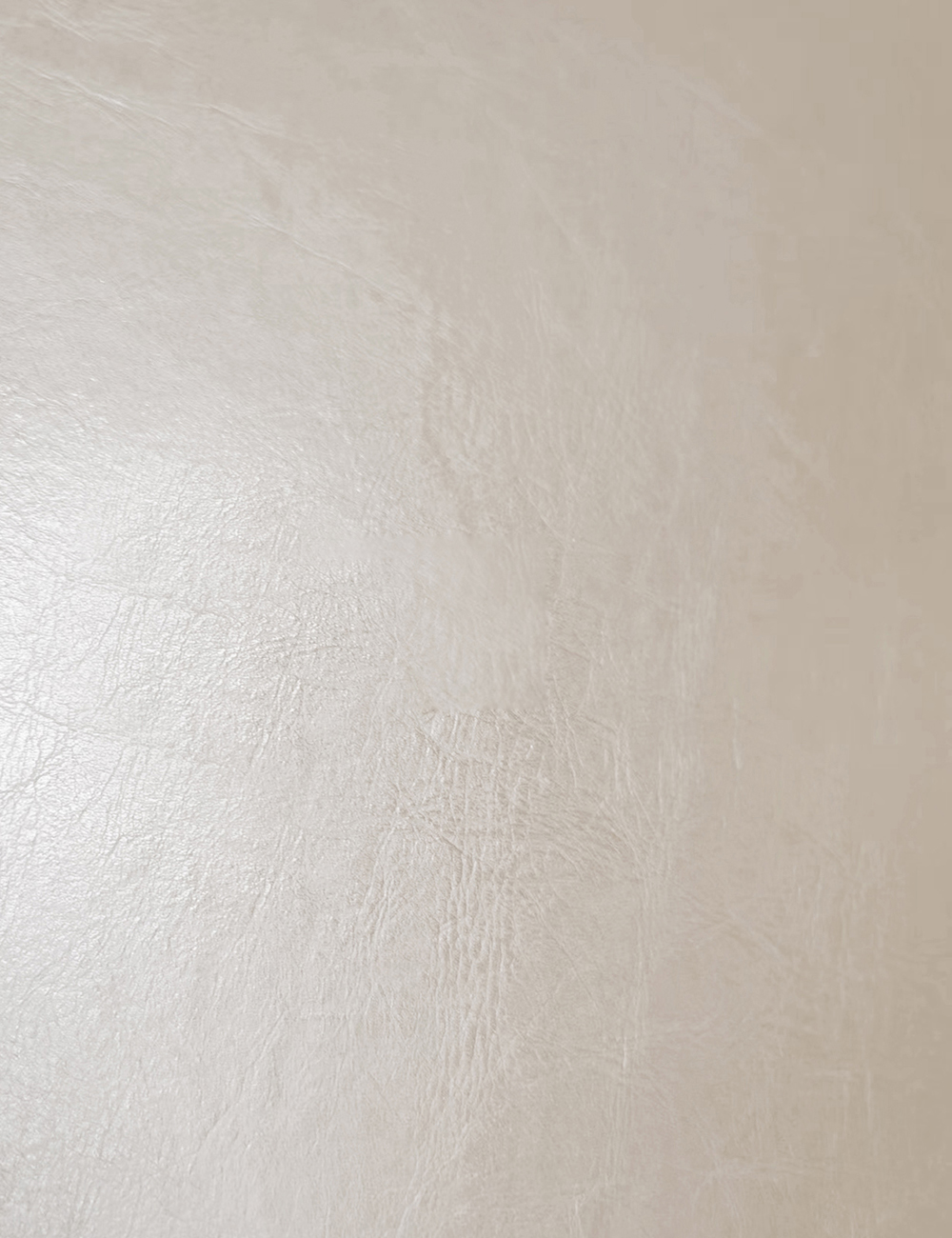 Leather Texture 4x9ft Decorative Panel SeriesBrowse leather-texture panels in calf and nappa finishes, with variant colors and model numbers, suited to interior surfaces where measurable performance matters.View Product →
Surface durability: four tests, four different failures
Surface durability on a decorative board is defined by abrasion, scratch, impact and stain resistance, and each one fails differently in service, which is why a single wear number rarely predicts how a face will age.
- Abrasion resistance is expressed as cycles to decor breakthrough using the test methods in the EN 438-2 series. It governs how the face survives repeated wiping, and it matters most on horizontal surfaces and on fronts cleaned daily in commercial fit-outs.
- Scratch resistance interacts with gloss level. A high-gloss face records fine scratches that a matt, textured face absorbs visually, so two boards with identical test results can look very different after a year of use.
- Impact resistance, typically assessed with a falling-ball method, translates directly into chipped door edges, trolley strikes in retail and tray knocks in hospitality.
- Stain resistance is measured by timed exposure to defined reagents. A 24-hour result tells you more about a hotel breakfast counter than any colour card.
Texture direction is the underrated variable. A synchronised grain that follows the decor removes visual evidence of light scuffing; a mismatched embossing does the opposite and makes every mark legible under raking light.
Worth remembering: abrasion resistance decides how the decor dies, impact resistance decides how the edge dies. On furniture, the edge usually goes first.
Thickness: nominal, tolerance and the variation inside one panel
An 18 mm board is not 18.00 mm. Sanded particleboard and MDF are commonly calibrated to about +/-0.2 mm on nominal thickness, measured by the method in EN 324-1, and the variation within a single panel is what disturbs joints, hinges and edge banding.
Buyers who ask only for the nominal figure miss the point. A 35 mm hinge cup bored into a panel that swings 0.3 mm in thickness will not seat identically at both ends of a run, and a 0.4 mm edge band on a high-variation board shows a shadow line that no amount of adjustment removes.
- Measure at five points per panel with a caliper and record the minimum and maximum, not the average.
- Check repeatability across the pallet, because a stable 17.9 mm panel machines better than an unstable 18.0 mm one.
- Specify 25 mm for worktops and open shelving spans, 18 mm for carcasses and doors.
- Confirm the thickness swell class before specifying anything near water, using EN 317 as the reference test.
Consistency beats nominal size: a panel that measures 17.9 mm everywhere is easier to machine, edge and assemble than one that averages 18.0 mm and swings 0.3 mm across the sheet.
Large formats change the thickness argument. A 2070 x 2800 mm panel removes the horizontal seam from a tall door front, and it also reduces the number of joints where a caliper difference can show.
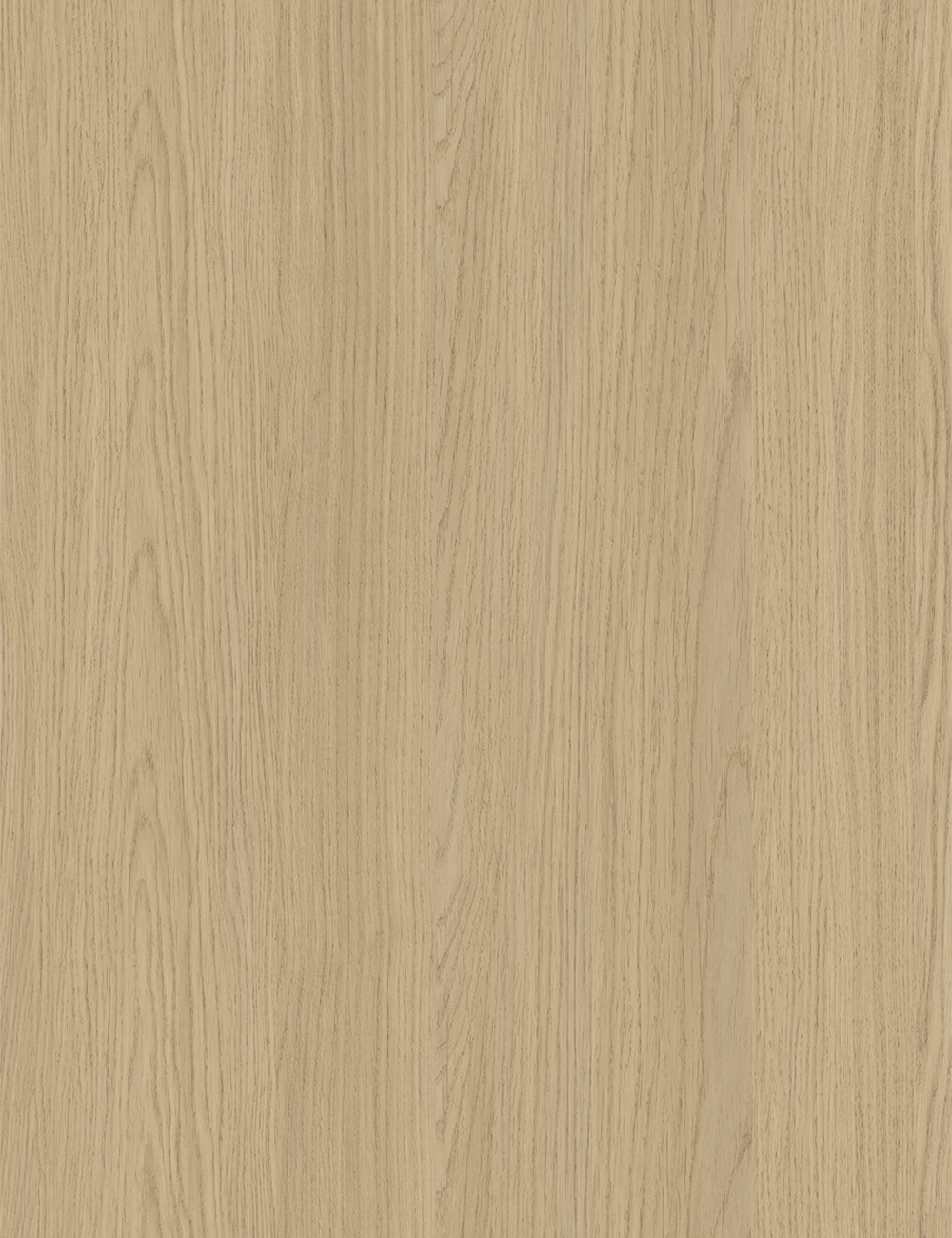 7x9ft Wood Grain Decorative Panel SeriesLarge-format decorative panels in wood grain variants, including oak, walnut and maple tones, available for furniture and interior panel supply.View Product →
Substrate quality: particleboard, MDF and what the core decides
For the same nominal thickness, MDF cores at roughly 650 to 800 kg/m3 machine and edge more cleanly than particleboard cores at roughly 600 to 700 kg/m3, while particleboard delivers a lighter panel at a lower cost per square metre.
| Property | Particleboard (EN 312) | MDF (EN 622-5) |
| Typical density | 600-700 kg/m3 | 650-800 kg/m3 |
| Face screw holding | Good from class P2 upward | Generally higher and more uniform |
| Edge machining | Chips at the cut, needs sharp tooling | Holds a routed profile and sands clean |
| 24-hour thickness swell (EN 317) | Higher within the same class | Lower; specify MDF.H for humid conditions |
| Handling weight | Lighter per square metre | Heavier per square metre |
| Relative cost | Lower | Higher |
Core density is also a surface question. A thin decor paper follows the topography beneath it, so a coarse, low-density core reads as orange-peel texture in raking light while the same paper over a fine, dense surface looks flat. This is why a laminate face at 0.7 mm can rescue a mediocre core and a 0.2 mm paper cannot.
What a press sample proves
- Decor colour against the approved chip
- Bond strength of one press cycle
- Surface quality of a hand-picked square
What a production lot proves
- Thickness distribution across the pallet
- Edge quality after a tooling change
- Density drift between shifts
- Moisture content at packing
Ask for the class, not the colour: EN 312 P3 or MDF.H is the difference between a bathroom front that survives and one that swells at the hinge plate.
Six checks to run before you approve a lot
Six checks, roughly two hours of work and one 150 mm offcut will tell you more about a laminated furniture board than any datasheet, because they test the board as it will actually be used.
- Caliper five points per panel. Record minimum and maximum rather than the average, and compare across three panels from different pallet positions.
- Cut a 150 mm square and inspect the core. Look at particle geometry, voids and the density gradient near the faces; a dark, dense skin and a loose centre is a pressing problem, not a sanding problem.
- Run a cross-hatch adhesion test on the face. Lift at the cut lines means the bond is marginal, and marginal bonds fail first in dry, heated interiors.
- Leave water on a face and an edge for 24 hours. Measure thickness change and check for edge lift; this single test predicts most kitchen and bathroom complaints.
- Drive, remove and re-drive a screw. The bite on the second pass tells you more about core integrity than the density figure on the label.
- Collect the paperwork. You want the EN 14322 declaration, the EN 312 or EN 622-5 class, the EN 717-1 result at or below 0.124 mg/m3 for E1, and batch traceability that links the pallet to the press date.
Documented production matters here as much as the sample itself. Visiting the plant, or reviewing its documented process and material selection record, is the cheapest way to confirm that the board you approved is the board you will receive.
Material selection and surface development are worth asking about directly during supplier qualification; a manufacturer that can explain its finishing line usually explains its tolerances too. See how the boards are produced before the first order, not after the first complaint.
Matching the face to the room and the cleaning regime
Face selection should follow the cleaning chemistry and the traffic, not the mood board; a matt synchronised wood grain survives daily disinfection in a hotel corridor better than a high-gloss lacquer that records every wipe.
For hospitality and retail work, the useful rule is to specify the surface by maintenance method first: aggressive daily cleaning pushes you toward a laminate face or a textured melamine, while low-traffic feature areas can carry veneer, leather-grain or metallic finishes. Reviewing built references in comparable settings is a practical shortcut. Hospitality interior references show how the same panel family behaves across lobbies, bars and guest rooms.
Curved elements deserve early attention because they cannot be re-detailed on site. A curved edge with a melamine face applied in the factory holds a tighter radius than one wrapped after delivery, and the edge treatment is where the moisture path begins.
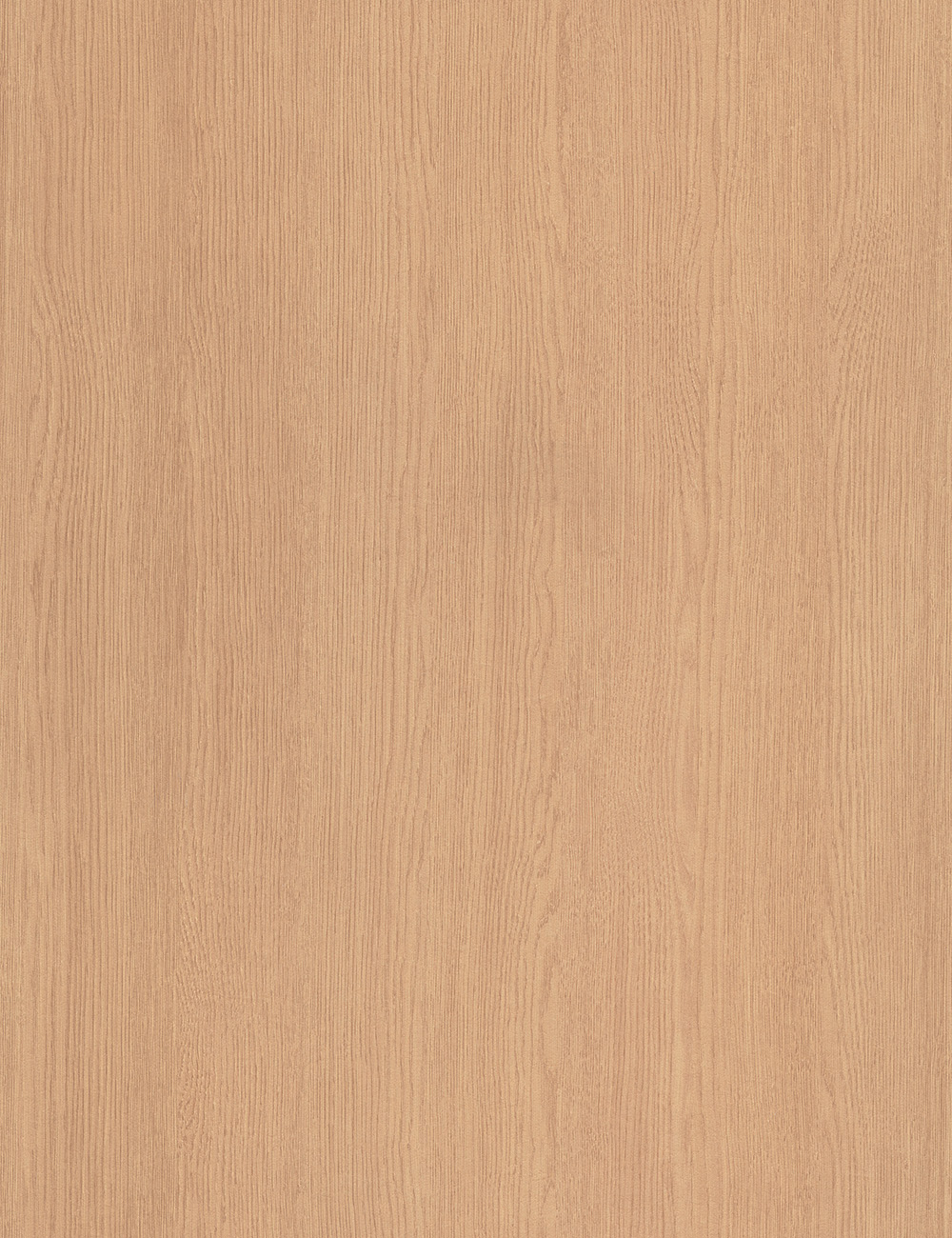 Custom Curved Edge with Melamine FaceFactory-applied melamine facing on a custom curved edge, intended for furniture and interior elements where early detailing and moisture paths matter.View Product →
The decorative panel range from CoreVip (Shanghai) Decoration Materials Co., Ltd. is organised by size and surface family rather than by room: 4x9ft panels at 1220 x 2800 mm and 7x9ft panels at 2070 x 2800 mm, across wood grain, solid colour, fabric, stone and marble, sandstone, leather, metallic, veneer, abstract and lacquered door faces, with particleboard and MDF as core options. Substrate choice therefore stays a specification decision rather than a range limitation.
Specification questions that decide the order
What thickness should a laminated furniture board be for cabinet carcasses?
18 mm nominal is the working standard for carcasses and doors, supplied at roughly +/-0.2 mm on a sanded core; move to 25 mm for worktops, open shelving spans and any surface expected to carry a point load without a sub-frame.
Is melamine faced board suitable for kitchen and bathroom fronts?
Yes, provided the core class matches the humidity. Specify EN 312 P3 particleboard or MDF.H to EN 622-5, seal every cut edge and band within the same shift, and treat 24-hour thickness swell to EN 317 as a mandatory line on the specification rather than an optional one.
How do you verify substrate quality without a laboratory?
Use a caliper at five points, a 150 mm offcut to inspect the core section, a 24-hour water test on face and edge, and a remove-and-re-drive screw test. A core that crumbles at the cut or lifts at the band will not hold a hinge regardless of its stated density.
What does E1 mean on a board datasheet?
E1 is a formaldehyde emission class determined by the chamber method in EN 717-1, with a limit of 0.124 mg/m3 of air. Ask for the test report for the specific board construction, since the core resin, not the decor paper, drives the result.


Copyright © CoreVip(Shanghai) Decoration Materials Co., Ltd. Rights Reserved.
China Decorative Cladding Panels OEM/ODM Manufacturers
